 Everyone wants to save more money, but with all the things we have competing for our attention, it can be difficult to figure out how to get started. Particularly if you’ve already spent a lot of time focusing on how to increase your savings, you may think that you’re currently implementing just about every strategy you know of.
But it’s quite likely you could be doing more, because saving money can come in many different forms. Adding funds to build up your savings and investment accounts is what we usually think of as “saving,” but you can also save money...
Everyone wants to save more money, but with all the things we have competing for our attention, it can be difficult to figure out how to get started. Particularly if you’ve already spent a lot of time focusing on how to increase your savings, you may think that you’re currently implementing just about every strategy you know of.
But it’s quite likely you could be doing more, because saving money can come in many different forms. Adding funds to build up your savings and investment accounts is what we usually think of as “saving,” but you can also save money... Basics
Borrowing Money Strategies for 2016
Saturday, January 2nd, 2016
Everyone wants to save more money, but with all the things we have competing for our attention, it can be difficult to figure out how to get started. Particularly if you’ve already spent a lot of time focusing on how to increase your savings, you may think that you’re currently implementing just about every strategy you know of.
But it’s quite likely you could be doing more, because saving money can come in many different forms. Adding funds to build up your savings and investment accounts is what we usually think of as “saving,” but you can also save money... What is Debt Burden?
Wednesday, April 24th, 2013
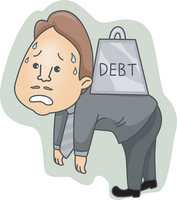 When it’s used as a personal finance term, “debt burden” refers to your cost of borrowing money. Each of the ways you borrow money – credit cards, home mortgages, car loans and student loans are the most common – will incur some type of finance charge, and sometimes a given debt or credit account will incur multiple types of charges.
In addition to an interest charge, there may also be account servicing fees, transactional fees, as well as late fees if you don’t make payments as required by the terms of your loan.
It’s important to distinguish between your debt...
When it’s used as a personal finance term, “debt burden” refers to your cost of borrowing money. Each of the ways you borrow money – credit cards, home mortgages, car loans and student loans are the most common – will incur some type of finance charge, and sometimes a given debt or credit account will incur multiple types of charges.
In addition to an interest charge, there may also be account servicing fees, transactional fees, as well as late fees if you don’t make payments as required by the terms of your loan.
It’s important to distinguish between your debt... What To Do When You Need To Borrow Money Quickly
Wednesday, October 3rd, 2012
 Even if you’ve done a great job in coming up with a solid budget and are sticking to it, there may still be times when you find yourself in a financial bind. Perhaps it’s because of an unexpected expense that exceeds what you have in your emergency fund. Or perhaps it’s simply something else for which you don’t want to use your emergency savings.
In these cases, you may need to borrow money quickly. As you might expect, you’ll end up paying more for a quick notice loan than you would for other types of borrowing.
But if you follow...
Even if you’ve done a great job in coming up with a solid budget and are sticking to it, there may still be times when you find yourself in a financial bind. Perhaps it’s because of an unexpected expense that exceeds what you have in your emergency fund. Or perhaps it’s simply something else for which you don’t want to use your emergency savings.
In these cases, you may need to borrow money quickly. As you might expect, you’ll end up paying more for a quick notice loan than you would for other types of borrowing.
But if you follow... How Should You Organize Your Finances Once You’ve Bought a House?
Monday, March 12th, 2012
 Buying a home is one of the most significant financial decisions you’ll ever make in your life. In order to come up with a large enough down payment (and to cover the closing costs on the transaction), you’ll have to get a good handle on your finances and map out a plan for saving up the amount you need.
But owning a home also requires you to organize your finances in order to pay for the maintenance and upkeep of your new house on an ongoing basis. Home ownership has an entirely different set of financial responsibilities as compared to...
Buying a home is one of the most significant financial decisions you’ll ever make in your life. In order to come up with a large enough down payment (and to cover the closing costs on the transaction), you’ll have to get a good handle on your finances and map out a plan for saving up the amount you need.
But owning a home also requires you to organize your finances in order to pay for the maintenance and upkeep of your new house on an ongoing basis. Home ownership has an entirely different set of financial responsibilities as compared to... Borrowing Advice Money Saving Strategies for 2012
Monday, December 12th, 2011
While achieving your financial goals won’t always correspond to precise dates on a calendar, it’s common to use the beginning of each new year as an opportunity to plan major actions relating to your finances and your budget. One big financial step that many people will be taking in 2012 is borrowing money.
You might be considering borrowing money in 2012 for any number of reasons; perhaps to purchase a new home (or refinance your mortgage), to buy a new car, for significant home improvement expenses or perhaps to finance or expand your businesses.
Below are some borrowing advice strategies you...
Borrowing Mistakes to Avoid
Friday, November 18th, 2011
 Most of us do everything we can to avoid getting sick. We wash our hands regularly, make sure our food is adequately cooked and do all of the other little things so that we don’t come down with a cold or the flu.
Unfortunately, we don’t always pay as much attention to our financial health. In many cases, any financial difficulties we find ourselves in are a direct result of our own actions or in-actions. Just as we try to avoid getting sick, we should avoid the bad decisions that could damage our financial well-being.
Here is some information and...
Most of us do everything we can to avoid getting sick. We wash our hands regularly, make sure our food is adequately cooked and do all of the other little things so that we don’t come down with a cold or the flu.
Unfortunately, we don’t always pay as much attention to our financial health. In many cases, any financial difficulties we find ourselves in are a direct result of our own actions or in-actions. Just as we try to avoid getting sick, we should avoid the bad decisions that could damage our financial well-being.
Here is some information and... Top Tips to Negotiate Your APR
Thursday, October 20th, 2011
 Credit cards offer a great deal of convenience and give us access to credit at a moment’s notice. So why do so many people think they’re evil? One reason is because they often come with a high APR (annual percentage rate).
Since lending money through credit cards is somewhat riskier than making a one-time loan, banks charge higher interest on them. If you carry a balance, that interest can add up in a hurry. And if you’ve made late payments or gone over your credit limit, you could be paying high double digit interest rates. What many cardholders do not...
Credit cards offer a great deal of convenience and give us access to credit at a moment’s notice. So why do so many people think they’re evil? One reason is because they often come with a high APR (annual percentage rate).
Since lending money through credit cards is somewhat riskier than making a one-time loan, banks charge higher interest on them. If you carry a balance, that interest can add up in a hurry. And if you’ve made late payments or gone over your credit limit, you could be paying high double digit interest rates. What many cardholders do not... Filing for Bankruptcy
Monday, June 27th, 2011
 Bankruptcy is something that we all hope we never have to go through. But for all too many consumers, unforeseen financial difficulties make bankruptcy one of the few options to get one’s credit and good name back. Before you file for bankruptcy, try to work out deals with your creditors, go through credit counseling, or see if a lawyer can help you find a workable solution.
If your finances have been derailed, however, bankruptcy may be your only hope for getting your debts behind you and making a fresh start. While it’s certainly not the ideal solution, it might be...
Bankruptcy is something that we all hope we never have to go through. But for all too many consumers, unforeseen financial difficulties make bankruptcy one of the few options to get one’s credit and good name back. Before you file for bankruptcy, try to work out deals with your creditors, go through credit counseling, or see if a lawyer can help you find a workable solution.
If your finances have been derailed, however, bankruptcy may be your only hope for getting your debts behind you and making a fresh start. While it’s certainly not the ideal solution, it might be... The Economics of Renting Versus Buying
Monday, May 30th, 2011
 Buying a home is part of the so-called American Dream. It gives homeowners a sense of pride, as well as the freedom to do as the please (within reason and within the law) with their property. But there’s a lot to be said for renting, too. It doesn’t tie you down to a specific location like buying does, and it gives you definite advantages when it comes to property maintenance.
Whether it’s better to rent or buy is a matter of your specific economic and life situations. It’s important to take these into account when you make a decision.
Here...
Buying a home is part of the so-called American Dream. It gives homeowners a sense of pride, as well as the freedom to do as the please (within reason and within the law) with their property. But there’s a lot to be said for renting, too. It doesn’t tie you down to a specific location like buying does, and it gives you definite advantages when it comes to property maintenance.
Whether it’s better to rent or buy is a matter of your specific economic and life situations. It’s important to take these into account when you make a decision.
Here... Tips for Borrowing from a Family Member
Tuesday, April 5th, 2011
 When you need to borrow money, your first stop is likely to be the bank. But depending on your particular circumstances, they may or may not be willing to help you. If you strike out there, where do you go next?
Lots of people turn to their families when they are in need of a loan but can't get it from traditional sources. While family members are often willing to lend a helping hand, doing so can create a sticky situation. If you're unable to repay, it could destroy your relationship not only with the lender, but with other family...
When you need to borrow money, your first stop is likely to be the bank. But depending on your particular circumstances, they may or may not be willing to help you. If you strike out there, where do you go next?
Lots of people turn to their families when they are in need of a loan but can't get it from traditional sources. While family members are often willing to lend a helping hand, doing so can create a sticky situation. If you're unable to repay, it could destroy your relationship not only with the lender, but with other family... 


 Loading ...